
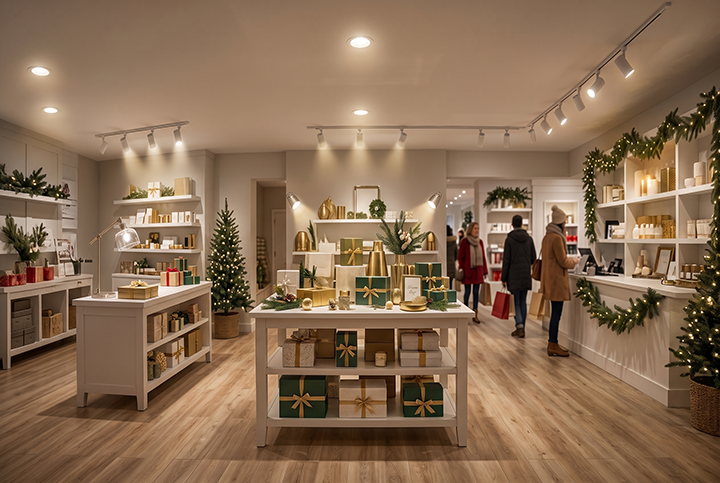

The holiday shopping season is one of the most important times of the year for retailers. Stores are busier, displays are more elaborate, inventory moves faster, and customers spend more time comparing products and making purchasing decisions.
While merchandising, promotions and staffing get much of the attention, lighting can have a significant impact on the retail environment and sales. The right lighting helps products stand out, creates a welcoming atmosphere and can make a store easier and more comfortable to navigate.
For retailers, October is an ideal time to take a close look at their lighting. The holiday merchandise is beginning to arrive, seasonal displays are taking shape and there is still time to correct lighting problems before the busiest shopping weeks of the year. Taking care of lighting maintenance and upgrades in October can help retailers avoid scrambling to address failed fixtures, dark areas or outdated technology when the holiday rush is already underway.
October: The Right Time for a Lighting Checkup
Waiting until November or December to discover lighting problems can create unnecessary headaches. Once holiday traffic increases, taking areas of the store offline for electrical work or fixture replacements can become much more difficult.
An October lighting review gives retailers time to:
• Identify failed or malfunctioning fixtures
• Replace aging lamps, drivers or other components
• Address dark areas created by new displays and merchandise
• Adjust accent lighting for seasonal products
• Check color consistency throughout the store
• Evaluate opportunities for LED retrofits
• Inspect exterior and entrance lighting before winter weather arrives
• Make lighting adjustments without disrupting peak-season operations
October can also be an excellent opportunity to evaluate the store after seasonal merchandising has been installed. A display that looked great on paper may create unexpected shadows or block light from reaching nearby merchandise.
A simple walkthrough before the holiday rush can reveal issues that might otherwise go unnoticed until customers are already filling the store.
- Start With a Lighting Walkthrough
Walk through the entire store with fresh eyes.
Look for burned-out lamps, flickering fixtures, dark areas, damaged lenses, mismatched color temperatures and areas where lighting levels have changed because of remodeling or merchandising changes.
Pay particular attention to:
• Entrances and storefronts
• Main aisles and high-traffic areas
• Product displays
• Checkout counters
• Fitting rooms
• Stockrooms and back-of-house areas
• Exterior entrances and parking areas
A small lighting problem that goes unnoticed during a normal business day can become much more obvious when the store is crowded and heavily merchandised. - Make Your Merchandise the Star
Retail lighting should do more than illuminate the sales floor. It should help direct attention toward the products a retailer wants customers to notice.
Accent lighting can be particularly effective for holiday displays, promotional areas and high-margin merchandise. Adjustable LED track lighting, spotlights and directional fixtures can provide additional emphasis without requiring a complete redesign of the store’s lighting system.
The goal isn’t simply to make everything brighter. It’s to put the right amount of light in the right place. - Pay Attention to Color Quality
Color matters in retail.
Customers need to see products accurately, particularly when shopping for clothing, cosmetics, food, furniture, paint, artwork and other products where appearance influences purchasing decisions.
LED products with a high Color Rendering Index (CRI) can help colors appear more natural and vibrant.
Retailers should also consider the application’s appropriate Correlated Color Temperature (CCT). For example, warmer light can create a comfortable and inviting atmosphere, while neutral or cooler CCTs can provide a cleaner, more energetic appearance.
The important thing is consistency. Mixing dramatically different CCTs throughout the same retail environment can make the store feel disjointed and can make merchandise appear different from one area to another. - Eliminate Dark Spots
Holiday displays, temporary signs and additional merchandise can change the way light moves through a store.
A display that wasn’t there six months ago could now be blocking light from reaching a portion of an aisle. Tall holiday decorations can also create unexpected shadows.
Walk the sales floor at different times of day and look for areas that feel noticeably darker than surrounding spaces.
Pay special attention to:
• Corners
• Endcaps
• Shelving beneath overhead fixtures
• Areas behind displays
• Checkout lines
• Entrance transitions
Good retail lighting should provide enough illumination for customers to comfortably see products, signage and their surroundings without creating excessive glare. - Check for Glare
More light isn’t always better.
Excessive brightness or poorly positioned fixtures can create glare on polished floors, glass display cases, screens and glossy product packaging. Glare can be particularly problematic at checkout areas where employees and customers may spend considerable time looking at displays and screens.
When evaluating a lighting upgrade, consider not only how much light a fixture produces, but where that light is going and how it is perceived by the customer.
Optics, beam angles, fixture placement and mounting height all influence the final result. - Consider Energy Efficiency
The holiday season can mean longer operating hours and increased lighting demand.
That makes energy efficiency especially important.
For retailers still using older lighting, an upgraded LED retrofit can potentially reduce energy consumption while also providing improved light quality and significantly longer service life.
LED technology can also provide additional flexibility through dimming, controls and sensor technologies.
Before replacing fixtures, however, retailers should evaluate the existing system, electrical requirements, mounting conditions and desired light levels to make sure the replacement is appropriate for the application. - Don’t Forget the Back of the Store
The sales floor gets most of the attention, but back-of-house lighting is equally important to store operations.
During the holidays, stockrooms can become extremely busy as employees move merchandise from storage to the sales floor. Adequate lighting helps employees locate inventory, read labels and safely move through crowded spaces.
Loading areas, receiving docks, employee areas and storage aisles should all be included in a seasonal lighting inspection. - Use Controls Where They Make Sense
Lighting controls can help retailers manage energy use without sacrificing the customer experience.
Occupancy sensors can turn lights on or off based on activity in appropriate areas, while daylight harvesting can reduce electric lighting when sufficient natural light is available.
Bluetooth-enabled lighting controls can also provide additional flexibility in some applications, allowing retailers to configure and adjust lighting zones without extensive rewiring.
Controls aren’t appropriate for every retail space, but they can be particularly useful in stockrooms, offices, restrooms and other areas where lighting needs vary throughout the day. - Give the Exterior a Seasonal Check
The customer experience begins before shoppers enter the building.
Check exterior wall packs, canopy lighting, parking-area fixtures, entrance lighting and signage illumination before the holiday season begins.
Exterior lighting should provide appropriate visibility while helping customers easily identify entrances and navigate the property.
A well-lit entrance can also help create the right first impression as customers arrive at the store. - Create a Lighting Maintenance Plan
Finally, don’t wait until a fixture fails during the busiest shopping weekend of the year.
Retailers should have replacement lamps, drivers or appropriate retrofit components available for critical applications and should know which fixtures or lighting systems require attention.
For larger retail operations, a preventive maintenance schedule can help identify potential failures before they become customer-facing problems.
A Brighter Holiday Shopping Experience
Retail lighting is ultimately about more than watts, lumens and fixtures. It is part of the customer’s experience.
Before the holiday crowds arrive, take a fresh look at the lighting throughout the store. A few strategic improvements today can help create a brighter, more comfortable and more effective retail environment throughout the entire holiday shopping season.

