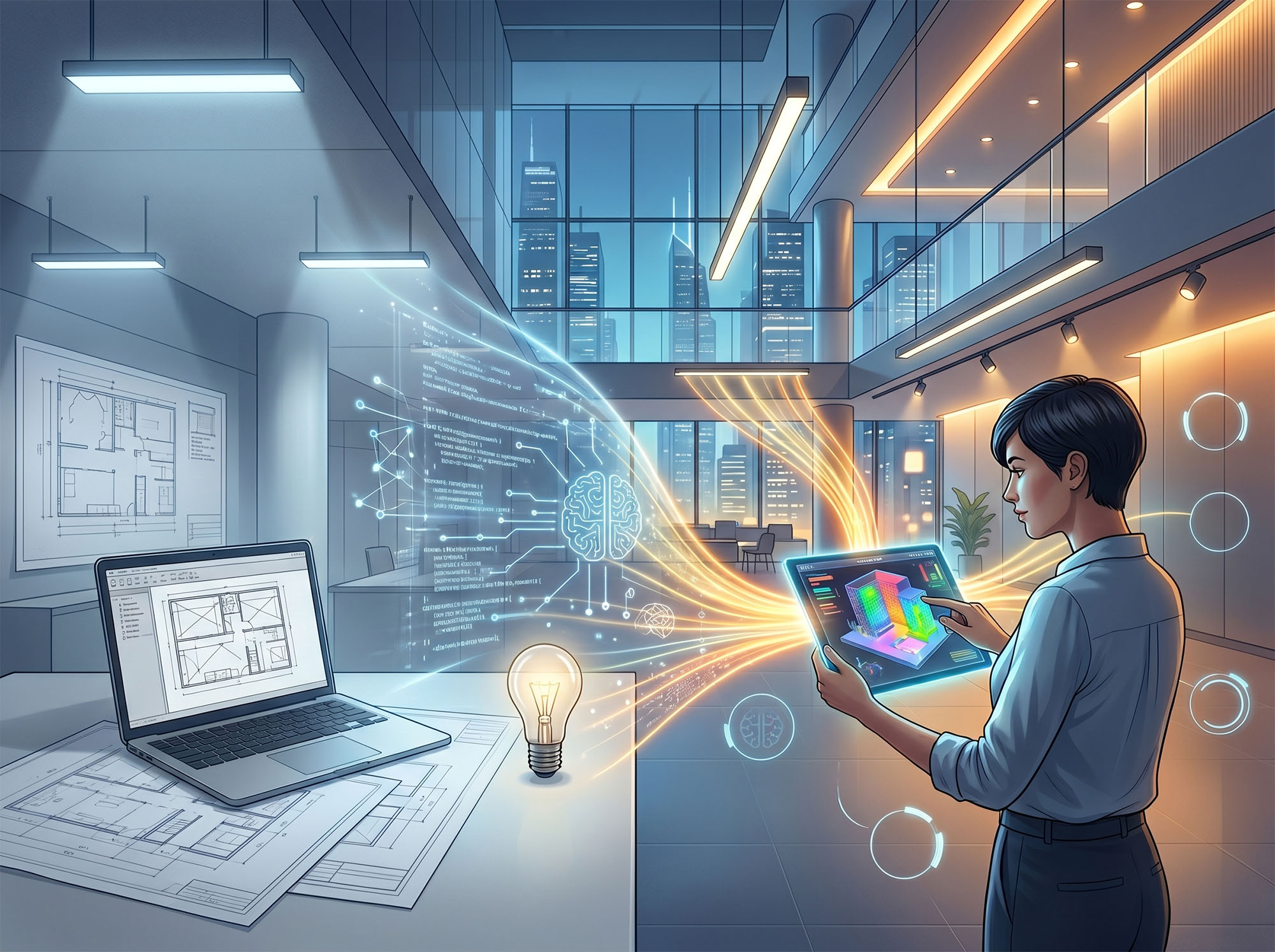
Lighting design has always felt a bit like solving a puzzle—one where art, science, and practicality all must click together just right. I remember the days when getting that puzzle right meant long hours tweaking layouts, running calculations, waiting for software to churn out results, and then doing it all over again and again. It was rewarding, but it was painstakingly slow and required remarkable patience. Today, with AI stepping into the process, it feels like the puzzle pieces suddenly move with you. What once took a full afternoon of trial and error can now unfold in moments, giving designers more room to think creatively instead of wrestling with the technical steps. It’s a shift that’s not just changing the work—it’s changing the experience of designing with light.
The Old Way: Manual Inputs and Iterative Guesswork
Not long ago, lighting design calculations were grounded in a combination of experience, static tools, and iterative modeling. Designers relied heavily on software like AGi32, DIALux, and Visual Lighting to simulate lighting layouts. These tools were powerful—but only as good as the inputs provided.
The process typically looked something like this: define the space, input fixture data, assign reflectance values, and run calculations. From there, designers would review photometric results—footcandles, uniformity ratios, glare metrics—and then tweak layouts manually. Move a fixture here. Adjust mounting height there. Recalculate. Repeat.
This iterative loop could take hours or even days for complex projects. And while experienced designers developed a strong intuition over time, much of the work still involved trial and error. Energy code compliance, daylighting integration, and controls strategies added even more layers of complexity.
The AI Shift
Artificial intelligence is transforming lighting design software from passive tools into active collaborators.
Modern platforms are beginning to incorporate AI-driven features that can:
– Automatically generate optimized fixture layouts based on project goals
– Predict lighting performance outcomes before full calculations are run
– Suggest energy-efficient solutions that meet codes like Title 24 or ASHRAE standards
– Learn from past projects to improve future recommendations
Instead of starting from scratch, designers can now input high-level goals—such as desired illuminance levels, energy targets, or aesthetic preferences—and let AI propose multiple design options instantly.
What once required multiple calculation cycles can now be compressed into minutes.
Smarter Modeling and Real-Time Feedback
AI also enhances the modeling process itself. Traditional rendering engines required full recalculations after every change, but AI-powered systems can provide near real-time feedback.
For example, as a designer adjusts fixture placement or selects a different luminaire, AI can instantly approximate:
– Light distribution changes
– Shadow behavior
– Daylight interaction
– Energy consumption impacts
This creates a much more fluid design experience—closer to sketching than engineering.
In addition, AI can analyze complex variables simultaneously. It can balance competing priorities like visual comfort, energy efficiency, and cost in ways that would be extremely difficult to do manually.
Beyond The Calculations: Integration with Controls and Data
Lighting design no longer ends with fixture placement. Today’s systems are deeply tied to controls, sensors, and building management systems.
AI plays a major role here by:
– Simulating occupancy patterns and adjusting lighting strategies accordingly
– Optimizing daylight harvesting based on geographic and seasonal data
– Predicting long-term energy usage and maintenance needs
This means lighting design is becoming less about static calculations and more about dynamic, human interaction with the lighted environment.
The Human Element: Still Essential
Speaking of human interaction, despite all these advances, AI isn’t replacing lighting designers—it’s augmenting them.
Design still requires creativity, storytelling, and an understanding of human experience. AI can optimize for metrics, but it doesn’t inherently understand the emotional impact of light in a space—the warmth of a restaurant, the focus of a classroom, or the drama of architectural accents.
What AI does is remove much of the repetitive, analytical burden, freeing designers to focus more on vision and intent.
What the Future Holds
Looking ahead, AI’s role in lighting design is only going to expand. We can expect:
– Fully generative design systems that create complete lighting schemes from architectural plans
– Deeper integration with BIM platforms like Autodesk Revit
– Real-time digital twins that continuously optimize lighting after installation
– Voice- or prompt-driven design interfaces (“Design a retail space with 30 footcandles and warm ambiance”)
– Greater use of predictive analytics to align lighting with human health and circadian rhythms
Eventually, lighting systems may become self-optimizing environments—constantly learning from occupants and adjusting in real time without manual intervention. These are all features that are currently being researched, built and deployed.
A New Era of Lighting Design
We’re living through a brand-new era for lighting design. AI is not just speeding up lighting calculations—it’s redefining the role of the designer and expanding what’s possible.
What used to be a linear, calculation-heavy workflow is becoming a dynamic, interactive process driven by data and intelligence. The result is better-performing spaces, more efficient designs, and a creative process that feels less constrained by technical limitations.
In many ways, AI hasn’t changed the puzzle of lighting design—it’s simply given us new tools to see the pieces more clearly and assemble them with greater speed, insight, and imagination.